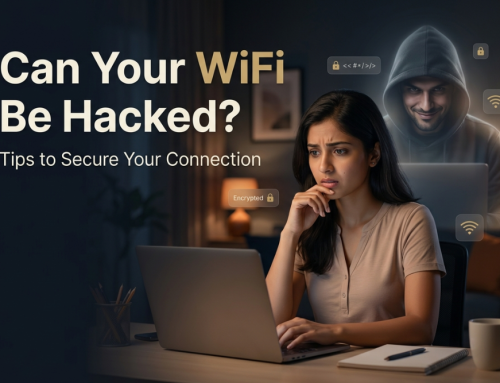

Public WiFi has become a normal part of everyday life. Whether you are sitting in a café, waiting at an airport, or relaxing in a hotel lobby, free internet often feels like a convenient bonus. Most people connect without thinking twice, open their laptop or phone, and begin checking emails, browsing social media, or accessing work platforms.
What many users do not realize is that public WiFi networks can expose personal information in ways that are often invisible. In some situations, other people connected to the same network may be able to monitor traffic, intercept data, or attempt to steal sensitive information without the user ever noticing.
Why Public WiFi Can Be Risky
Public WiFi networks are built for convenience and accessibility, not necessarily for security. Since these networks are designed to allow quick access for large numbers of people, many lack strong protection or advanced encryption.
When you connect to public WiFi, you are sharing the same network environment with many unknown devices around you. On poorly secured networks, this creates opportunities for malicious users to attempt unauthorized access or monitor activity.
Potentially exposed information can include:
- Login credentials
- Browsing history
- Email activity
- Personal account details
In many cases, users remain completely unaware that their information is being observed or intercepted.
Fake WiFi Networks Are a Common Trap
One of the most common public WiFi threats is the use of fake hotspots. This happens when someone creates a fraudulent WiFi network with a name very similar to the legitimate public network nearby.
For example, a user may see two network names such as:
- Airport_Free_WiFi
- AirportFree_WiFi
At a quick glance, both may appear authentic. However, one could actually be operated by a malicious individual attempting to capture traffic from anyone who connects.
This tactic is commonly referred to as an Evil Twin Attack and can be used to intercept browsing activity or login information.
How Interception Attacks Work
Another major threat on public networks is known as a Man in the Middle attack. In this situation, the attacker positions themselves between your device and the website or service you are trying to access.
Instead of your request going directly to the website, the connection may pass through the attacker first. This can allow them to observe or manipulate information being exchanged during the session.
Sensitive data that may be targeted includes:
- Passwords
- Login sessions
- Personal details
- Business credentials
The user often notices no visible sign that anything unusual is happening.
Malware Risks on Public Networks
Public WiFi can also be used as a method to spread malicious software. In some cases, attackers attempt to display fake pop-ups, redirect users to harmful pages, or encourage them to install suspicious software updates.
Once malware is installed, it may:
- Record keystrokes and passwords
- Monitor browsing behavior
- Access stored files
- Track device activity
Because the installation may appear harmless at first, users often do not realize the source of the infection.
Warning Signs That a Public WiFi Network May Be Unsafe
While not every public WiFi network is dangerous, there are several signs that may indicate increased risk.
Be cautious if you notice:
- Completely open networks with no password protection
- Duplicate network names that appear almost identical
- Suspicious login portals requesting unusual details
- Frequent disconnections or unstable behavior
These warning signs may suggest that the network is not secure or that fraudulent access points are present.
Best Practices for Staying Safe on Public WiFi
While public WiFi should always be approached carefully, users can reduce risk significantly by following safe browsing habits.
Recommended precautions include:
- Avoid logging into banking or financial accounts
- Do not access sensitive work dashboards or business platforms
- Only use websites secured with HTTPS encryption
- Disable automatic WiFi reconnection settings
- Use mobile data for highly sensitive tasks whenever possible
These simple habits help reduce the likelihood of exposing personal or professional information.
Why Private Broadband Offers Better Security
As digital activity becomes more important in daily life, more users are moving away from relying on public hotspots and investing in private home internet connections. A secure personal broadband network offers greater privacy, better stability, and more control over who can access the network.
Compared to public WiFi, private broadband provides:
- Improved network security
- More consistent performance
- Better privacy for daily browsing
- Greater reliability for work and entertainment
For families, professionals, and businesses, having a dedicated connection offers both convenience and peace of mind.
Choose Safer Internet with JetSpot
If you are relying too often on public WiFi because of unstable or limited internet access at home or work, upgrading to a private broadband connection is the smarter long-term solution. JetSpot provides high-speed fiber broadband in Bhubaneswar designed for secure, reliable, and uninterrupted connectivity across homes and offices. With stable performance, private network security, and broadband plans built for modern users, JetSpot helps you stay connected without depending on unpredictable public hotspots. Contact JetSpot today to experience safer and faster internet built for everyday life.